
How to Start a Furniture Flipping Business (What I Wish Someone Had Told Me)

So you’ve been watching furniture refinishing online, falling in love with the before and afters, and thinking — could I actually do this?
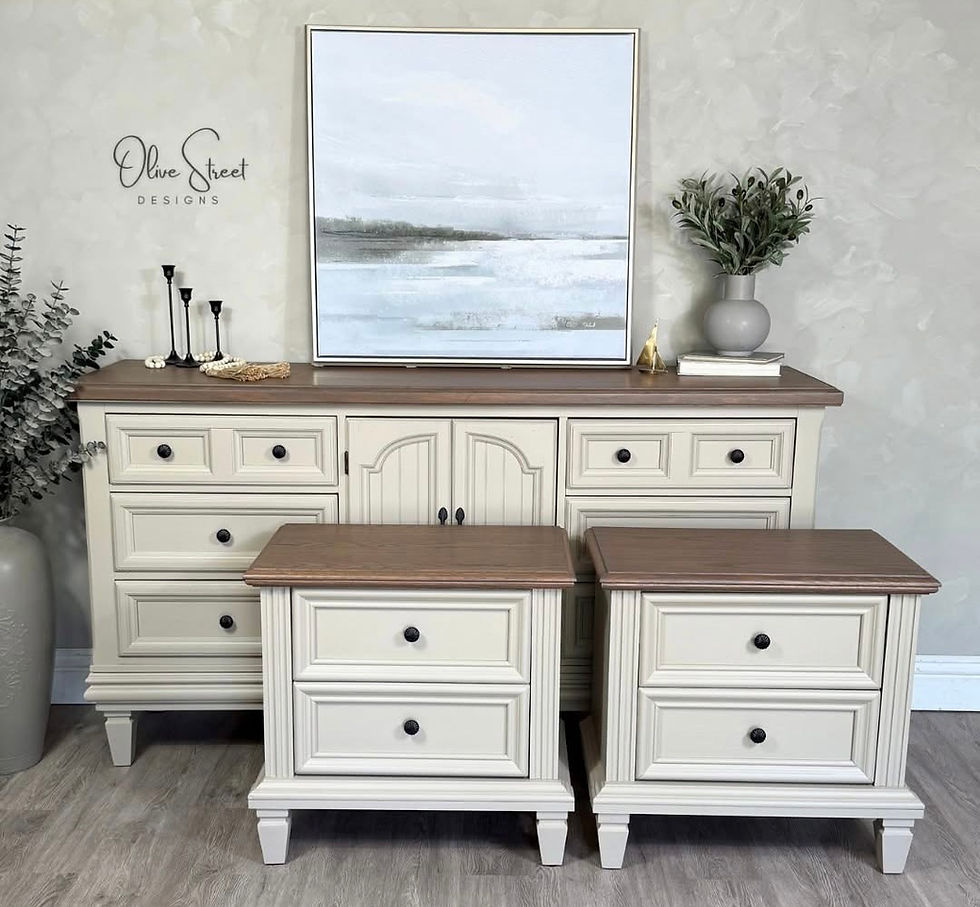
Yes. You absolutely can. But before you dive in, I want to give you the honest version of how to get started — not the hype, not the “I made $10,000 my first month” version. The real version. The one that sets you up to actually succeed.

First, Let’s Talk Money
One of the first questions people ask is: how much do I need to start?
The good news is you don’t need a lot. Realistically, $100 to $1,000 is a solid starting range depending on how fast you want to move. Here’s what that breaks down to:
On the lower end ($100–$300): You’re sourcing cheap or free pieces, working with basic tools you may already own, and keeping your product spend minimal. Totally doable, especially when you’re learning.
On the higher end ($500–$1,000): You have more flexibility to source better quality pieces, invest in a decent sprayer or better supplies, and start building a small inventory.
The beauty of furniture flipping is that you can start small, reinvest your profits, and scale at your own pace. You don’t need to go all in on day one.

The #1 Thing Beginners Underestimate
I’ll be straight with you: TIME
Almost every beginner underestimates how long it actually takes to complete a piece — especially in the beginning. Stripping, sanding, prepping, priming, painting, topcoating, drying time between coats, hardware… it adds up fast.
And here’s the thing — furniture refinishing is a skill. It takes time to learn, and it takes repetition to perfect. Your first piece will take longer than your tenth. Your tenth will take longer than your fiftieth. That’s not a discouragement — that’s just how any craft works.
The mistake is pricing your pieces without accounting for your time, or getting frustrated when a project takes a full weekend instead of a few hours. Give yourself grace in the beginning. You’re building a skill set, and that has real value.

The Best Piece to Start With
NIGHTSTANDS
If you’re just getting started, nightstands are your best friend.
Here’s why:
They’re small. Less surface area means less painting, less sanding, less time.
They’re everywhere. Thrift stores, Facebook Marketplace, and estate sales are full of them — often for next to nothing.
They sell well. People always need nightstands, and a beautifully refinished set photographs great and moves quickly.
They’re forgiving. If you make a mistake on a small piece, it’s a much smaller loss than making a mistake on a large dresser.
Start with nightstands, get your process dialed in, build your confidence, and then graduate to larger pieces like dressers and buffets.

What You Actually Need to Get Started
You don’t need a fully equipped workshop on day one. Here’s a realistic starter list:
For sourcing furniture to refinish:
- Facebook Marketplace, Craigslist, thrift stores, estate sales, and curb alerts are your best free and low-cost sources.
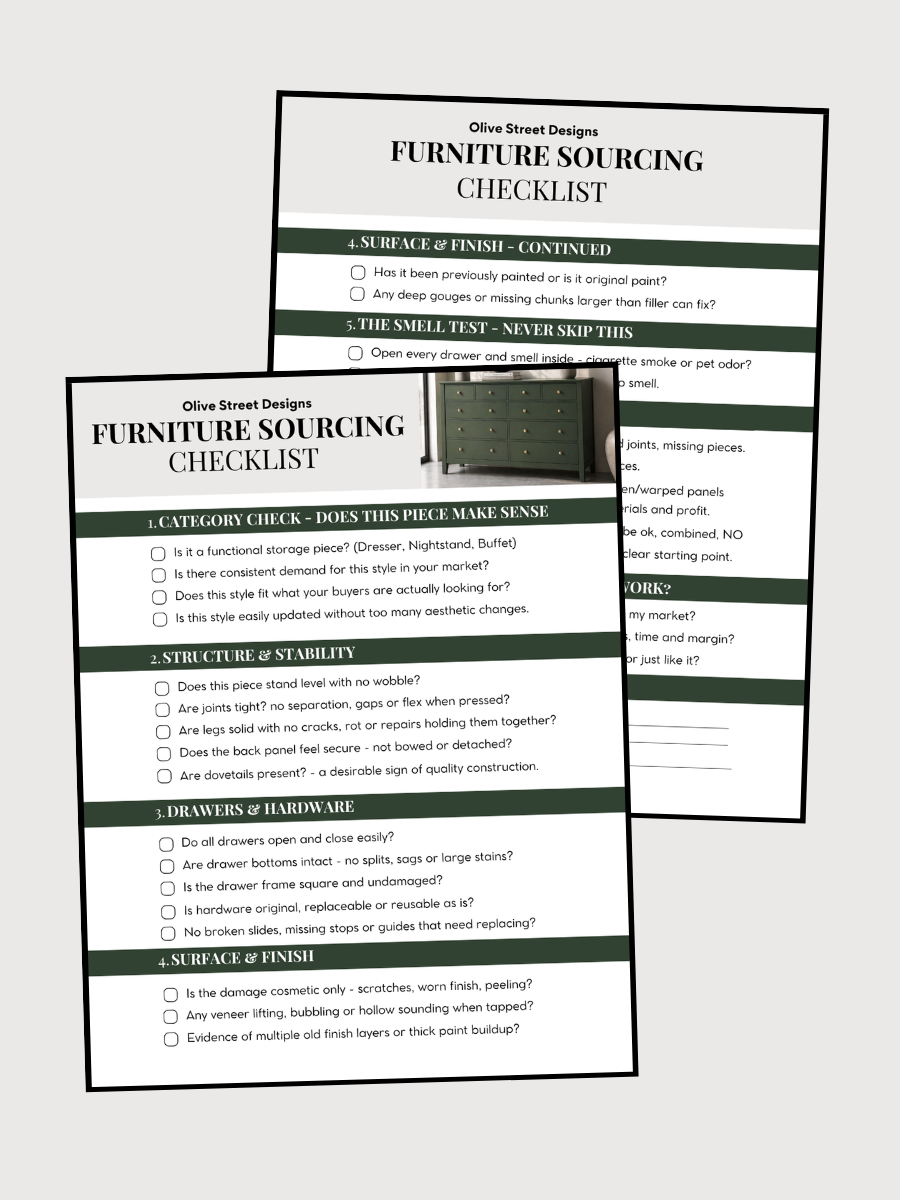
I have a full Sourcing Furniture Checklist on my website. Take it with you when you go to estate sales, thrift stores or furniture pickups. It will help you run through the items you need to screen to determine if it is a good item to purchase or not.
For supplies:
- Sandpaper (various grits)
- A good primer
- Quality furniture paint
- A topcoat/sealer
- Brushes or a beginner sprayer (the HomeRight Finish Max is a great low-cost entry point)
- Basic hardware (new pulls can transform a piece)
To make it easier: I have a full list of Beginners Supplies on my Amazon Storefront.
For your business:
- A way to track your costs and profits from day one — this is non-negotiable if you want to actually make money and not just break even
Track Everything From Day One
This is the part most beginners skip — and it costs them. If you don’t know what a piece cost you (purchase price + supplies + your time), you can’t price it correctly. And if you can’t price it correctly, you’re not running a business, you’re running an expensive hobby.
I built a Master Project & Profit Tracker specifically for this — it tracks everything from what you paid for the piece to every supply cost to your final sale price, so you always know exactly what you made. It’s one of the most used tools in my shop for a reason.

Ready to Go Deeper?
If you’re serious about starting a furniture flipping business — not just as a hobby but as a real income stream — I wrote the book on it. Literally.

I have a hardcover book available on Amazon that goes even deeper than anything I could cover in a single blog post. It’s the complete beginner’s roadmap — sourcing, prepping, painting, finishing, pricing, and selling — all in one place. I wrote it because I wished something like it had existed when I started, and it’s the most comprehensive thing I’ve ever put together. Whether you’re just getting started or you’ve done a few pieces and want to level up, this is the resource I’d hand you first.
My Beginner’s Guide to Furniture Refinishing walks you through everything: sourcing, prepping, painting, finishing, pricing, and selling. It’s everything I wish I’d had when I started.

And if you want the complete system — sourcing, refinishing, AND the business side — the MEGA Bundle has everything bundled together at the best value.

One Last Thing
The people who succeed at furniture flipping aren’t necessarily the most talented. They’re the ones who show up consistently, keep learning, and don’t quit after their first imperfect piece.
Start small. Start scrappy. Start with a nightstand.
The skills will come. The business will follow.
You got this!!!
*Have questions about getting started? Drop them in the comments — I read every single one!*


Comments